Mobile App Developer Twitter Header: A Visual Blueprint for Your Brand
Your Twitter profile is often the first handshake with potential clients, collaborators, or users. For a mobile app developer, this space isn't just a placeholder; it's prime digital real estate. A generic, poorly sized, or uninspired header can undermine your technical expertise before a visitor even reads your bio. This is where a dedicated, professionally designed template becomes more than a convenience—it's a strategic asset. A well-crafted Mobile App Developer Twitter Header template provides the foundational canvas to project competence, creativity, and clarity, instantly communicating what you do and why you're worth a follow.
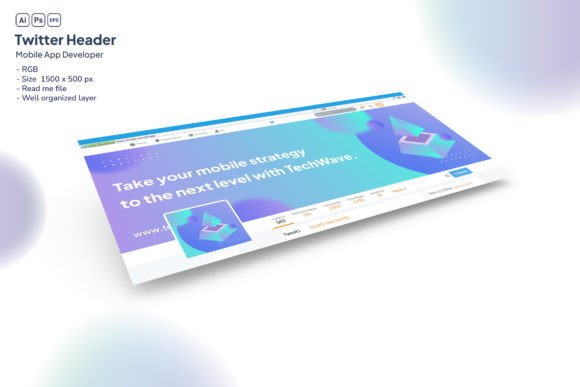
Think of your header as a billboard for your personal brand or studio. It needs to convey complex information—your specialty, your aesthetic, your value proposition—in a single, glanceable moment. A template designed specifically for developers understands this context. It likely incorporates clean lines, modern typography, and space for key visual elements like app screenshots, device mockups, or abstract tech-inspired graphics. The layout is optimized for Twitter's specific dimensions (1500 x 500 pixels), ensuring your critical information isn't awkwardly cropped on different devices. This isn't just about looking good; it's about professional presentation that builds immediate trust.
Beyond the Code: Visual Storytelling for Developers
While your portfolio and GitHub profile showcase your technical skills, your Twitter header tells a visual story. It’s an opportunity to humanize your brand. Are you a solo developer who loves minimalist design? A studio specializing in vibrant gaming apps? An enterprise-focused team building robust solutions? The header sets the tone. Using this template, you can seamlessly integrate your logo, a concise tagline, and perhaps a compelling call-to-action like "Download our latest app" or "Let's build something great." This transforms a static image into a dynamic marketing tool that drives engagement right from your profile.
The practical applications extend far beyond a single social platform. The design principles and assets you develop for your Twitter header—your chosen color palette, font pairings, and visual style—become the cornerstone of your entire brand identity. This consistency is crucial for recognition. Imagine your Twitter header echoing the design language of your website's hero section, your LinkedIn banner, and even your presentation decks. This cohesive visual system makes your brand appear more established, thoughtful, and memorable. It’s a fundamental step in moving from being seen as just another coder to being recognized as a distinct professional or company.
Practical Design Choices for Maximum Impact
Let's talk about execution. A template's value is in its flexibility. You need to make intentional design choices that align with your goals. Start with typography. A clean, modern sans-serif font is often a safe bet for readability and a tech-forward feel, but don't shy away from a distinctive display font for your name or a key word if it matches your brand's personality. The key is contrast and hierarchy. Your name or studio title should be the most prominent text, followed by your specialty or tagline in a complementary, slightly smaller weight.
Next, consider imagery. A mockup of your flagship app on a smartphone is a classic and effective choice. It immediately answers the question, "What do you make?" Alternatively, abstract geometric shapes, subtle code snippets, or a custom illustration can convey innovation and creativity without being literal. Use color strategically. Does your brand use a bold, energetic palette? Or is it more subdued and professional? Ensure your chosen colors have enough contrast against your text to remain legible, especially when viewed on mobile screens. The template's RGB color mode is perfect for digital clarity.
Finally, leverage the included file formats. Having the source files in Adobe Illustrator (.ai) or Photoshop (.psd) means you have full control. You can tweak every element, swap out fonts, adjust layouts, and ensure every pixel is perfect. This level of customization is what separates a generic header from one that feels authentically yours. The EPS file offers further flexibility for other design software. This isn't a locked-down graphic; it's a starting point for your unique creation.
Integrating Your Header into a Broader Brand Strategy
Your Twitter header shouldn't exist in a vacuum. It's one piece of a larger visual puzzle. Use it to inform other design assets. The font you select for your header could become your brand's secondary typeface for headings on your website or in your marketing emails. The color scheme can guide the palette for your app's UI, your business cards, or your blog. This process of "design system thinking" saves time and reinforces brand cohesion across every touchpoint, from social media graphics to print materials and merchandise.
Consider this template a tool for professional development. As you work with it, you'll make decisions about font pairing, layout balance, and visual hierarchy—skills that are invaluable for any creative project. You might test a bold, modern display font against a more traditional serif to see which conveys your brand's voice better. You'll learn to leave breathing room in your design so it doesn't feel cluttered. These are the practical, hands-on lessons in visual communication that directly improve how you present yourself and your work to the world.
Ultimately, investing time in your Twitter profile's visual presentation is an investment in your professional narrative. It signals that you care about details, understand the importance of branding, and are serious about your craft. A dedicated Mobile App Developer Twitter Header template provides the professional framework you need to build that narrative effectively, allowing your technical skills to shine within a polished and compelling visual context. It’s the bridge between your code and your audience's first impression.