Master Your Social Strategy with a Canva Content Calendar
Let’s be honest: the "posting when you feel like it" strategy rarely works. If you are a small business owner, a freelancer, or a creative trying to build a brand, the pressure to be consistent on Instagram, TikTok, or LinkedIn can feel crushing. You might have a camera roll full of photos and a head full of ideas, but when it comes time to actually sit down and design a post, you freeze. This is where having a structured system changes everything. We are talking about moving away from chaotic, last-minute scrambling and stepping into a workflow that feels calm, organized, and professional.
That is exactly why a Social Media Content Canva Template is such a game-changer for modern creators. It is not just about having pretty graphics; it is about having a roadmap. Imagine opening your computer on a Monday morning knowing exactly what you are going to post for the next five days, with your captions written and your visuals ready to go. This kind of efficiency allows you to focus on what you actually love—whether that is making pottery, coaching clients, or running a boutique—rather than getting bogged down by the mechanics of digital marketing.
Visualizing Your Brand Identity
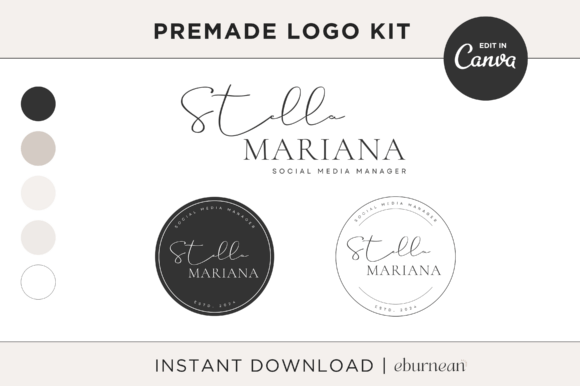
One of the biggest hurdles in maintaining a professional online presence is visual consistency. If your Instagram feed looks like a scrapbook of random colors and fonts, it confuses your audience. A robust content calendar template includes a dedicated Brand Board section. This is a vital design asset that acts as your visual north star. By compiling your logo, specific hex color codes, primary fonts, and secondary typefaces in one place, you ensure that every piece of content you create feels like it belongs to the same family.
Think of this Brand Board as your quick reference guide for brand identity. When you are tired and rushing to get a post up, you don't want to be guessing if that blue is "Cerulean" or "Cobalt." Having your premium font pairings and color palettes documented prevents you from using random styles that dilute your brand recognition. Whether you are using a sans serif font for clean readability or a script font for a touch of elegance, keeping these assets organized within your planner ensures that your visual consistency remains unbroken.
The Power of the Feed Planner
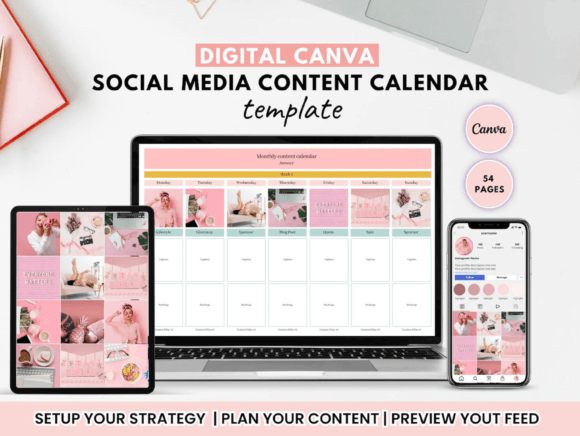
Instagram is a visual platform, and the grid matters. Before you even think about hitting "publish," you need to see how the posts look next to each other. This is where the Feed Planner feature of a high-quality Social Media Content Canva Template shines. It allows you to drag and drop your images into placeholders to visualize the rhythm of your grid. Are you alternating between text-heavy graphics and photography? Is the color distribution balanced?
Using a feed planner helps you avoid the "patchwork quilt" effect where your profile looks disjointed. It allows you to experiment with different layouts. For example, you might decide to use a specific display font for quotes on every third tile to create a pattern. Or, you might use a modern typography style for your educational carousels to ensure readability on mobile devices. By planning the visual flow, you are essentially doing the work of an editorial design director, ensuring that your social media graphics are not just individual posts, but a cohesive gallery.
From Idea Bank to Execution
Creativity often strikes at inconvenient times. You might be in the shower or on a walk when a brilliant idea for a Reel or a static post hits you. Without a system, that idea is often lost by the time you sit at your desk. A comprehensive Canva template includes an Idea Bank—a designated space to dump these raw thoughts without worrying about formatting or scheduling.
This feature bridges the gap between brainstorming and production. Once an idea is in the bank, you can move it to the weekly Content Calendar. Here, you aren't just scheduling a date; you are defining the strategy. You choose the content pillar (e.g., educational, entertaining, promotional), the format (carousel, story, reel), and the intention (drive traffic, build community). This level of detail ensures that every post serves a purpose, turning your marketing assets into strategic tools rather than just noise.
Practical Typography and Design Choices
When populating your template, your choice of typography plays a massive role in engagement. A common mistake is choosing a creative font that looks beautiful but fails the readability test on a small phone screen. When designing your graphics, consider using a clean serif font for headers to add authority, paired with a simple sans serif font for body text to ensure clarity.
If your brand leans more artisanal or personal, a handwritten font can add warmth, but use it sparingly—usually only for accents or headers—to keep the text legible. The goal is to create marketing assets that are easy to consume. High engagement often comes from graphics that are effortless to read. Therefore, when customizing your planner, pay attention to the text overlays. Ensure there is enough contrast between your font color and the background image. This attention to detail elevates your content from amateur to professional, making your web design and social presence feel premium.
Beyond Social: Repurposing Your Content
A great content strategy doesn't live and die on Instagram. The work you do inside your Social Media Content Canva Template can be repurposed across multiple channels. The graphics you design for a carousel can be resized for packaging design inserts or print materials. The brand board you establish ensures that your logo design is used correctly on merchandise or invitations.
Furthermore, tracking your progress is essential for growth. A Growth Tracker included in your planning template allows you to monitor what is working. Are your digital products selling better when you use a bold, modern font? Are your educational posts getting more saves? By tracking these metrics, you refine your approach. You might discover that your audience prefers a specific font pairing or responds better to certain color schemes. This data-driven approach removes the guesswork from your branding efforts, allowing you to scale your business with confidence and clarity.